Most coverage misses the real story here. Space exploration and commercial spaceflight deserve a closer look than the usual surface-level reporting, and once you dig deeper, the reason becomes obvious.
What makes this different from previous space cycles is the Artemis programme’s plan for a crewed lunar landing by 2026-2027. When you look past the hype, the evidence points to something genuinely new happening.
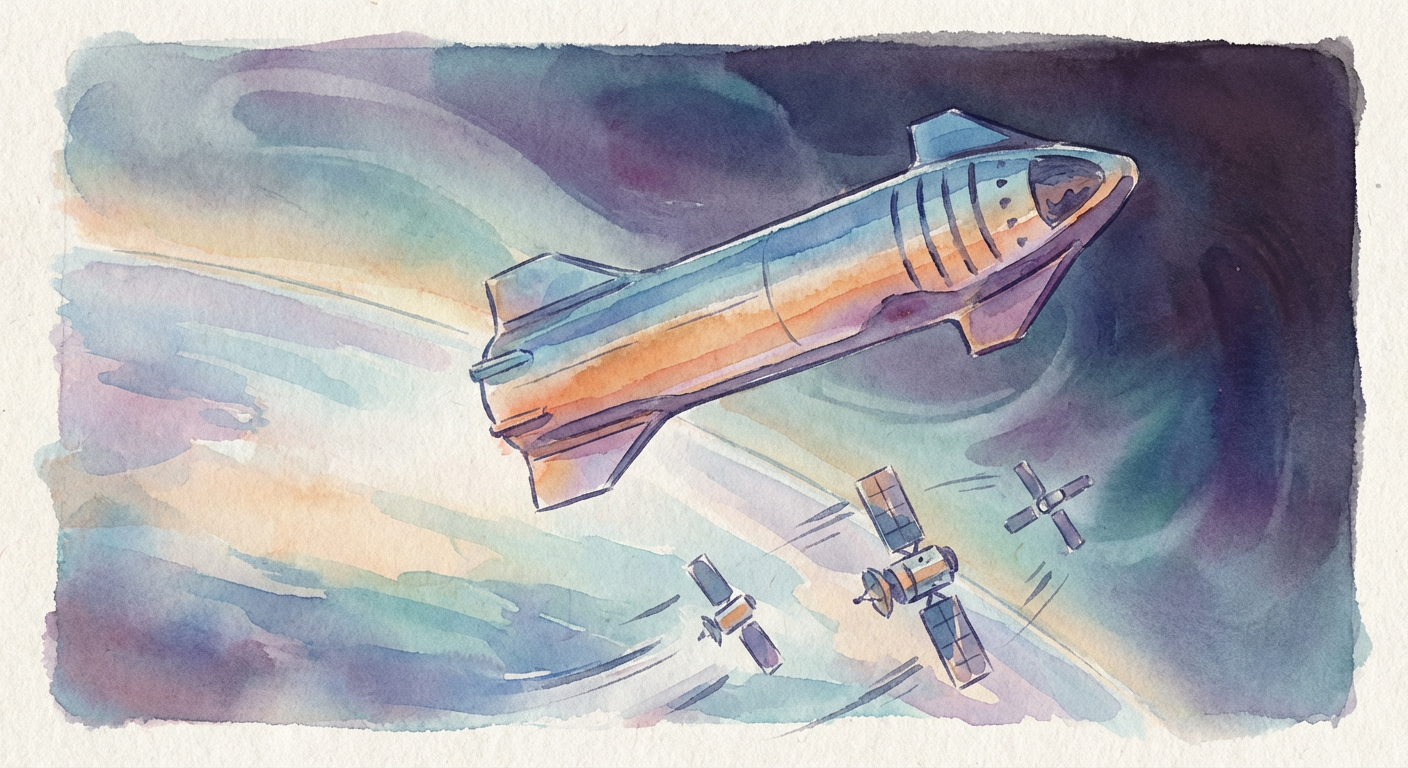
The Thinking: Setting the Terms
SpaceX’s Starship completing orbital flights and starting commercial payload launches isn’t just another milestone. It’s the foundation that makes everything else in this analysis possible. This isn’t a trend that will fade quickly. The pieces have been moving into place for years, and they’re finally coming together in a way that’s different from past moments that looked similar from the outside.
Look at what’s happening: Artemis is targeting a crewed lunar landing by 2026-2027. Commercial space station programs from Axiom and Blue Origin just got NASA contracts. Put these together and you start seeing a pattern that NASA news has been tracking from the inside. The conditions are more solid than they first appear, and the ripple effects go way beyond the immediate headlines.
To understand why this matters, compare what was true three years ago to what’s true now. The change isn’t just about bigger numbers. The players, the infrastructure, and the incentives have all shifted in ways that build on each other instead of canceling out. That compound effect is what you need to watch.
What makes this moment worth paying attention to isn’t that it’s completely novel. It’s that we’re getting confirmation of dynamics that have been building for a while. What’s new is that these forces have hit a threshold where you have to actively ignore them rather than just not noticing them. Crossing that threshold is the real event, not the underlying movement that created it.
The asteroid mining regulatory framework being developed at the UN level fits into this same picture. These aren’t separate developments happening in isolation. They’re all part of the same structural shift.
The Implications Chain: The Analysis
The asteroid mining regulatory framework being developed at the UN level is where things get more concrete. The obvious reading isn’t wrong, but it misses how this actually works, and understanding the mechanism is where you find practical insights. What makes this different from previous cycles is that space debris mitigation rules are now mandatory for new satellite operators. Once you understand this, it changes how you interpret everything else.
Think about what mandatory space debris mitigation rules actually represent. This isn’t some random coincidence. It’s the result of structural factors that have been building up. Previous analyses of similar situations got it wrong because they confused symptoms with causes. The structural explanation might be less exciting as a headline, but it’s more useful for actually understanding what’s happening.
Looking at prior cycles is helpful precisely because of where the comparison breaks down. Similar-looking conditions played out differently before because the foundation was different. Lunar economy projections reaching $170 billion by 2040 represents a change in that foundation. It’s the kind that changes how the system responds, not just its current state. Recognizing this distinction separates real analysis from simple pattern matching.
The skeptical view deserves serious consideration: previous moments with similar characteristics didn’t produce the expected outcomes. That’s real history. What’s different now is those lunar economy projections reaching $170 billion by 2040. This isn’t a minor detail, it’s the infrastructure condition that previous cycles lacked. Infrastructure changes stick around in ways that sentiment-driven changes don’t. Space News industry is tracking this dimension with the rigor it needs.
There’s also a question that often gets ignored in space exploration coverage: who actually benefits from these changes, and who pays the costs? The overall picture can look positive while the benefits get distributed unevenly in ways that matter enormously to specific participants. Keeping that lens in view is part of reading the situation clearly rather than just optimistically.
Implications: What This Means If You Care About Technology implications of basic science
The effects of space exploration and commercial spaceflight reach beyond the immediate space industry. SpaceX’s Starship completing orbital flights and beginning commercial payload launches, combined with the structural conditions I described above, creates ripple effects that hit adjacent fields, decisions, and communities in ways that aren’t always obvious from inside the main story. The second-order effects are often more important than the first-order ones, and that’s where careful attention pays off.
Here’s where my analysis differs from mainstream coverage: commercial space station programs from Axiom and Blue Origin receiving NASA contracts is a leading indicator, not a lagging one. The people who respond to what this signals, rather than what it confirms, will be less surprised by what comes next.
How you respond depends heavily on where you sit relative to these dynamics. If you’re close to the core of space exploration and commercial spaceflight, the implications are immediate and operational. If you’re further away, they’re strategic. You need to understand which adjacent pressures are building and which assumed stabilities are more fragile than they look.
The question isn’t whether to engage with these dynamics but how. The answer depends on your context, your role relative to space exploration and commercial spaceflight, and your actual decision timeline. But the first step is the same regardless: understanding what’s actually happening rather than what the most available narrative says is happening.
A few concrete points worth pulling out from the broader analysis. First: Artemis targeting a crewed lunar landing by 2026-2027 isn’t a temporary condition. It’s a new baseline. Second: mandatory space debris mitigation rules suggest the adjustment period isn’t over. Third, and most important: organizations and individuals treating the current moment as a new steady state rather than a transition are making a mistake that will be expensive to fix later.
The Case Against: What the Critics Get Right
Being honest means engaging with the strongest counterarguments, not just the weakest ones. The case against the optimistic reading of space exploration and commercial spaceflight isn’t trivial. There are real structural vulnerabilities that deserve direct engagement rather than dismissal.
The most serious objection is about sustainability. Commercial space station programs from Axiom and Blue Origin receiving NASA contracts could be read not as a foundation but as a ceiling. A point where growth becomes self-limiting because of the very dynamics that produced it. If we’ve already incorporated most of the early-adopting participants, the remaining growth curve might be structurally shallower than the recent trajectory suggests.
There’s also the policy and regulatory dimension. SpaceX’s Starship completing orbital flights and beginning commercial payload launches describes a condition in a relatively friendly regulatory environment. Regulatory responses to the scale these numbers imply aren’t inevitable, but they’re not impossible either. Organizations planning as though the current regulatory environment is permanent are making an assumption that the history of fast-growing sectors doesn’t support.
My response to these concerns isn’t that they’re wrong. It’s that they’re already partially built into the current state of the field. Lunar economy projections reaching $170 billion by 2040 reflects an environment where participants are already adapting to constraints rather than operating without limits. The ecosystem’s ability to adjust is higher than a purely top-down view of the risks suggests.
Looking Forward
The direction is clearer than the timing. Predicting when specific milestones will hit is genuinely hard, and anyone claiming precision about timelines should be viewed with skepticism. But the direction toward SpaceX’s Starship completing orbital flights and beginning commercial payload launches and continued development of the conditions I described above is supported by evidence in a way that doesn’t depend on a single variable going right.
Lunar economy projections reaching $170 billion by 2040 is the variable to watch as the leading indicator. Historical patterns suggest it moves first, with broader metrics following with some delay. This doesn’t make the outcome certain, but it makes it readable, and readability is what you need for good decisions.
Three questions worth holding as the story develops. First: are the structural conditions that enabled the current state durable, or are they cyclical? Second: who is positioned to benefit from the next phase, and does that differ materially from who benefited in the current phase? Third: what would a clean disproof of the optimistic thesis look like, and is there any evidence of that signal emerging? These questions don’t need answers today, but asking them changes what you notice in the months ahead.
The direction is clear even when the pace isn’t. We’re at a moment in space exploration and commercial spaceflight where people who have built an accurate model of the underlying dynamics are better positioned than people relying on the surface story. Building that model isn’t quick, but it’s doable, and this analysis is meant as one input into it.
What am I missing? Researchers in adjacent fields, I want your take.